
Media Release from Burmese Rohingya Organisation UK (BROUK)
FOR IMMEDIATE RELEASE: 12th January 2026
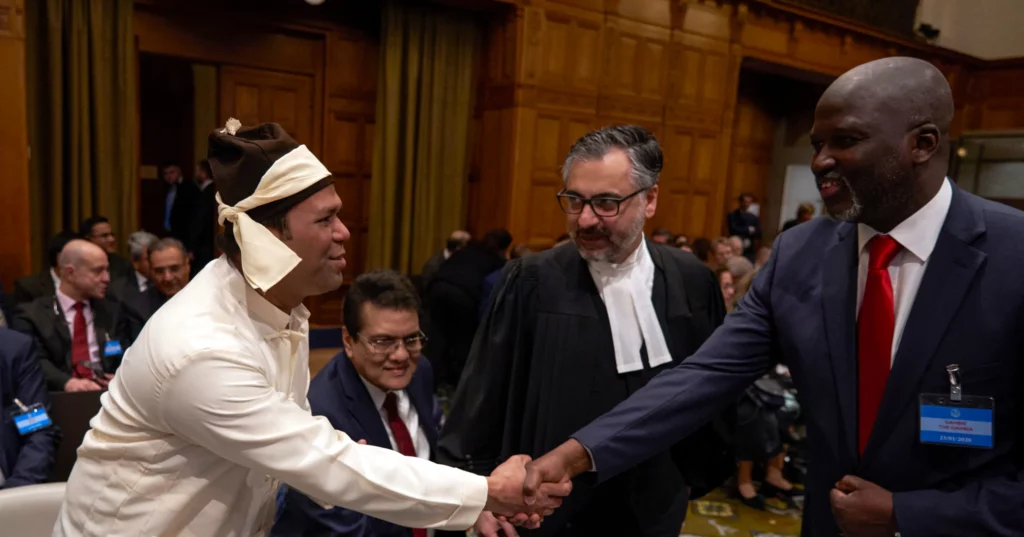
This week, Burma will appear before the International Court of Justice (ICJ) as public hearings open in the Rohingya genocide case. For Rohingya survivors, this marks a long-overdue opportunity for their suffering to be heard.
Brought by The Gambia more than six years ago, the case will proceed to hearings on the merits examining violations of the Convention on the Prevention and Punishment of the Crime of Genocide.
“After six long years, Burma will finally have to answer before the Court for the crimes of 2017,” said Tun Khin, President of the Burmese Rohingya Organisation UK (BROUK). “But the genocide against the Rohingya has far from ended. Rohingya continue to face atrocities, war crimes and crimes against humanity in Rakhine State, while more than one million people remain forcibly displaced and denied their right to return home.”
The genocide never stopped
Rohingya communities in Rakhine State continue to face systematic persecution by both the Burmese military and the Arakan Army, an ethnic Rakhine armed group that now effectively controls most of the state and continues the same genocidal policies against the Rohingya.
BROUK’s recent report, The Rohingya Genocide – Starvation and Forced Labour as Tools of Erasure, documents how military-imposed aid and trade blockades, together with forced labour, arbitrary detention and violence by both the Burmese military and the Arakan Army, are driving life-threatening food insecurity and displacement.
Restricted humanitarian access and communication blackouts have worsened the crisis, pushing communities toward famine-like conditions. These abuses constitute ongoing violations of the binding provisional measures ordered by the ICJ in 2020.
UN officials have also issued stark warnings about the escalating crisis facing Rohingya in Rakhine State:
- Volker Türk, the UN High Commissioner for Human Rights, has warned that Rohingya communities are enduring extreme suffering amid violence, aid blockades and systematic rights violations, and has stressed that accountability is essential to prevent further harm.
- In his March statement to the Human Rights Council, Tom Andrews, the UN Special Rapporteur on the human rights situation in Myanmar, warned that ongoing abuses and deprivation in Rakhine State are placing Rohingya at serious risk of further atrocity crimes and called on States to act urgently to protect civilians.
The Arakan Army has yet to face any sanctions or criminal charges for abuses against Rohingya civilians.
Justice, prevention and the future of Burma
BROUK recognises and is grateful for the leadership of The Gambia in bringing this case and for the support of the eleven intervening states, including the United Kingdom.
“After decades of breaking international law with impunity, the significance of the Burmese military finally being forced to defend itself before a court cannot be underestimated,” said Tun Khin.
“Being heard before the Court brings recognition after years of denial and erasure. But justice requires more than hearings. It requires an end to the ongoing genocide, accountability for all perpetrators and the full restoration of Rohingya rights.”
Despite overwhelming evidence of international crimes against the Rohingya, progress through formal international justice mechanisms has remained limited. The International Criminal Court has yet to issue its publicly announced arrest warrants for Min Aung Hlaing or other senior Burmese military leaders.
The only accountability process to date that has produced arrest warrants has been a Rohingya-led universal jurisdiction case, driven by survivors themselves and enabled through decisive action by The Argentine judiciary.
Justice and accountability for the genocide are vital not only to address past atrocities, but also to end the culture of impunity that has enabled grave crimes against all the people of Burma and to prevent future violations. Delivering meaningful accountability is essential to securing the protection and return of Rohingya refugees, and to paving the way for reconciliation, genuine political inclusion and a peaceful, democratic Burma.
For media inquiries:
Please contact Tun Khin on +44 (0)7888 714866 or email info@brouk.org.uk